Tuesday, July 30, 2013

My FREE Teachers Pay Teachers Store


I have uploaded all my shared documents and files to my new Teachers Pay Teachers Store. However, I want to reassure you that the items will remain FREE OF CHARGE.

You're welcome! :)

Tuesday, July 2, 2013

Review of the Draft Core Arts Standards


We have our first look at the new Core Arts Standards! The draft documents for Pre-K through 8th grade are now posted on the NCCAS wikispace. I have already downloaded the files to my Dropbox so I can view them on my iPhone or iPad easily. (If you are not familiar with Dropbox, you can read about it on a previous post.) There is a survey for each area (music, art, drama, dance) you can complete after you review the standards. These surveys are only available through July 15th.


Basic Elements?


Not really included, they are more implied. I love the nine standards that are currently in place. I wish they had just elaborated upon those. Another blogger, Tim Purdum, has already shared his thoughts of the draft and agrees that the standards focus on creating and improvising, but don't address the steps required to learn the basic fundamentals.  Wendy Davidson, a middle school band and choir teacher in my district, shares the same sentiment, "I totally agree that there is no standard for ELEMENTS OF MUSIC! When I did the survey review, I mentioned that if they are not addressed, that is a major problem. It's like building a beautiful house on sand instead of a foundation."
How can a student analyze and create music without first learning the basic elements? The students need a strong understanding of the musical elements before they can apply higher-order thinking skills like analysis.


Student-Friendly Terms?


No. Our school and district requires that we post the learning objective as an "I can . . . " statement in student-friendly terms. (If you missed this post, click this link.) Many of the music standards are very long and technical. Here is a music anchor standard under responding, "Explain how your analysis of the structure and context of the work influence your response." The essential question related to this standard is "How does understanding the structure and context of the music influence our response?"  No student I teach (K-5) would understand what this means. The writers of the standards are thinking about the teachers and not the students. I would like to see age-appropriate language under each grade level so that we do not have to reinterpret the standards for our student learning objectives.


Grade-level specific?


Yes! Each grade level (Pre-K through 8th) has a description of how they should fulfill each anchor standard. I love how the early grades use language like "with guidance" and "with support." The language also progresses through the hierarchy of Bloom's taxonomy. Take a look at the second page of the Music Standards under Responding:


The verbs change from explore in Pre-K, to demonstrate in Kindergarden. First grade is asked to identify and demonstrate while 2nd and 3rd grades are asked to identify and write or explain. Fourth grade and up are asked to analyze. If you notice, the writers have used italics to draw your attention to the simple changes from one grade level to another. This is extremely helpful for teachers to interpret the standards. It looks as if they will also include lists of suggested music in the future drafts. This would be helpful as well, although I hope districts interpret them as suggestions only and do not limit us to a short list of repertoire.


Secondary Applications?


My colleague, Wendy, also shared her thoughts on how the standards would apply the ensemble setting vs. humanities classes,

"I know from experience that by the time they get into middle school they are not ready (in a general music setting) for the 6-8 standards. I think the standards work very well for ensemble classes, but not for general music or arts and humanities."

The high school standards have not yet been shared because they will not be structured by grade level, since many elective classes may contain students of many grade levels all learning the same content. Instead, they will be written in terms of a student's 1st year of study, 2nd year of study, etc. Perhaps they should have done something similar for the middle grades to address this difference in learning curve between students enrolled in ensemble courses vs. students in a general music class or humanities class.


Consistency Across the Art Forms?


I also teach visual arts one day a week because we do not have a full-time art teacher at my school. I also try to integrate dance and drama into my music classes, when possible. Because of this, I took a look at the standards for all art forms. Aside from the common processes of Creating, Performing/Presenting/Producing, and Responding, there are major differences between each art from.  The music standards include 4 or 5 pages under each artistic process. However, the visual art process of creating includes 11 pages. Also, the music standards only have one essential question under each Anchor Standard while the visual art standards have 2-3 essential questions under each anchor standard. I also feel like the visual art standards are written in more student-friendly language than the music standards. I think the writing teams need to communicate more with each other so that there is more consistency with language and structure across the art forms.

What Do You Think?

Take time to review the draft standards and feel free to share your thoughts below. But, most importantly, share your thoughts with the writing teams! The survey is only available until July 15th!

Tuesday, June 25, 2013

The Remarkable Farkle McBride


I teach this book every year to my second graders, but I have also used it as an emergency lesson for a substitute teacher for any grade level. If you are not familiar with the book, you can browse a few of the pages on Amazon.

My musical goal for this book is to introduce or review the instrument families. This book is very well written. The words naturally fall into a rhythmic beat with a compound meter. The vocabulary used is very rich; some of my favorite words selected for this book include beseeching, astonished, superb, renowned, rhapsodical, and tether.

Before reading the book, I introduce the instrument families. Whenever we encounter an instrument in the book, I ask what family it belongs to. Before reading, I also introduce onomatopoeia and alliteration. The students are asked to listen for both of these literary elements.

Onomatopoeia


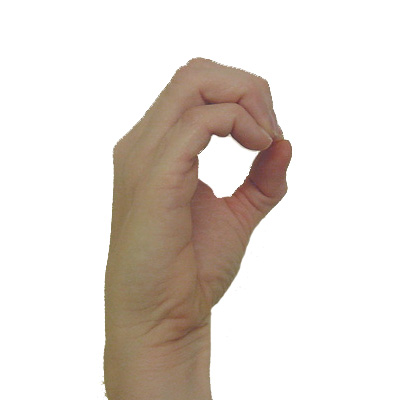
When they hear onomatopoeia, they are supposed to show me the sign language "O". Each instrument features their own onomatopoeia and when they instruments come together at the end, I have the students try match the words to their instrument. We also discuss the percussion sounds, discovering that "clang" probably comes from a metal instruments.
We also learn how to spell onomatopoeia. In my 8th grade English class, we were given onomatopoeia as a spelling word. My friends and I discovered that it was easy to spell the word if you sing it to the tune of "Old MacDonald." To this day, I always hum the tune to spell the word and I will never forget it. I practicing singing it with the students and then we play a trick on the classroom teacher. When the students line up, they ask the teacher if onomatopoeia can be a bonus word on their spelling test. The first year I did this, the teachers thought I was crazy. They were astonished when the majority of the students spelled it correctly on their Friday spelling test! The power of music is amazing! :)

Alliteration


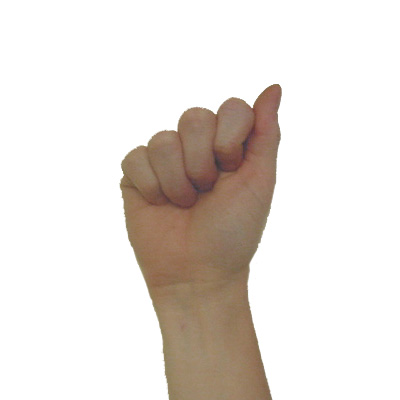
When they hear alliteration, they show me the sign language "A." There are numerous examples of alliteration. Here are some of my favorites:
"Farkle flung his flute"
"boulevards buzzed"
"whimpy and whiney"

Of course, sometimes, we found both onomatopoeia and alliteration in the same example.

"boom, bash, clanga ma clash"

Some students would use two hands to show both letters. Since I was using one hand to hold the book, I would use my other hand to switch between both letters.
I really like the use of hand gestures. Its a quick way to visually assess the entire class and see if most students are understanding the concept. Its also a nice alternative to everyone yelling out the answers or raising their hands to try to give the answer.

At the end of the book, I usually demonstrate each of the instruments Farkle played in the book and pick some students to try them out too. I pass around resin so the students can see it. I pass around a conductors baton (a cheapo, not my Mollard!) This lesson is definitely not Orff-based, but the students are always so intrigued with this lesson. It is a favorite.

Feel free to comment below and share your ways to use Farkle in lessons.


Core Art Standards Draft Review


There will be a public review of the new Arts Standards on the wikispace for the National Coalition for Core Arts Standards. The review will be opened on June 30th and close on July 15th. This is a small window. They want input quickly.  If you are interested in reviewing the standards and providing input, follow this link: http://nccas.wikispaces.com/NCCAS+June+30th+Public+Review

Thursday, May 30, 2013

Dropbox for the Music Teacher


I have fallen in love with Dropbox!

I was first introduced to Dropbox by a colleague. She recorded herself singing some songs for our district honor choir for the students to use when practicing. She shared the audio files with me via Dropbox.

I have also used Dropbox to store sheet music. I scanned the music for the All-State Children's Chorus and uploaded it to my Dropbox so that I would be able to study the scores at home on my iPad, even if I forgot the sheet music on the piano stand at school. Likewise, it prevented me from leaving the sheet music at home and not being able to rehearse with it at school. In fact, at All-State Children's Chorus, my student forgot her music in the car, which was parked 4 blocks away in a parking garage. I gave her my iPad and she was able to view the sheet music via Dropbox!

The biggest use for Dropbox has been with my preparation of my National Board Portfolio. When I began the analysis of my videos, I first set up two laptops on the kitchen table. One would be used to play video footage while I typed on the other. At some point, I had an epiphany and uploaded my videos to Dropbox. I was able to view them on the iPad and type on my laptop. I also uploaded all the instruction manuals (which were organized in a 2.5 inch binder). With Dropbox, my iPad replaced a laptop and a huge binder. It was much easer to move my things upstairs and downstairs when needed.

I was also able to share files with my sister so she could proofread them. When you open Dropbox on your computer, you can drag and drop files into the folder as you would into any other folder. It is very easy!

If you have not tried Dropbox, you should check it out!

Hello, again

Hello again! I apologize for the absence of my posts. Here is an update on what I have been doing the last five months:

In January, I began working on my National Boards Portfolio and had very little time to plan my lessons and capture them on video. Not only was the portfolio deadline quickly approaching, my belly was growing as well! On March 29th, I gave birth to a beautiful baby boy!
My maternity leave allowed me to take off the rest of the year. I worried little about my students because I had a retired music teacher filling in for me. I knew they were in great hands. It took me about a month to get out of the newborn coma and for the entire month of May, I've been using every spare moment to complete my portfolio entries. Today, I finally submitted my portfolio to be scored! I still have to take a computer-based test toward the end of June, but the biggest work is behind me! The results will be announced in December. I will keep you posted.

Now, I plan to get back into the swing of things and share some more posts. Here are some ideas for my first posts. Leave a comment to let me know what you would like to read about first.

1) Designing Interactive Flipcharts for Interactive Whiteboards
2) Click Clack Moo
3) Crazy Eights
4) Rap a Tap Tap
5) Farkle McBride
6) Arts & Humanities Program Reviews (Kentucky Accountability System)

Friday, January 25, 2013

The Journey Begins . . .


Some may call me crazy, but I have decided to attempt my National Boards. I found out in December that a federal subsidy to refund half of the application fee was expiring. Anyone who completes their portfolio by March 31st is still eligible for the subsidy. Baby #2 is due March 29th! I thought long and hard about whether I should attempt this task while in my third trimester. My final decision was made when I realized that I would be even more crazy to expect to have more time for my National Boards when there are two children demanding my attention! I always planned on completing my boards because it would be a significant pay raise. It will count as my Rank I, but my district and state also offer additional salary supplements to National Board Certified teachers. The hard work will definitely be worth it in the end!

I thought about waiting until I was completely finished with my boards before blogging about it, but I think I will keep you posted with tips and wisdom that I discover along the way. I have made one big realization this week regarding the videos. Two of the entries have time limits of 15 minutes. Many of my lessons start on the carpet in front of the Activboard to prepare the concept and lesson material, then we move to the Orff instruments. Although I try to be as efficient as possible, the transition to move to the instruments causes delay in instruction as we often must get extra mallets for students sharing instruments, take off bars to prep the pentatonic scale, etc. You are not allowed to edit the videos submissions, so this was very puzzling if I wanted to include part of the instruction on the carpet and on the instruments. 

Yesterday, I had an epiphany! Before beginning the lesson and before hitting record on the camera, the students chose their instrument they would be playing for the day. We took care of all issues with mallets and removed the appropriate bars. After everything was prepared, we came back to the carpet to begin the taped part of the lesson. The transition to the instruments took 60 seconds or less! 

Now, on to my next challenge . . . finding a way to mute the intercom system and telephone!

If you are also attempting your National Boards, I would love to network! Comment below or you could send me a private message if you are a fan of this blog on Facebook.