Showing posts with label improvisation. Show all posts

Sunday, January 24, 2021

Scratch Melodic Games


The challenges of distance learning have led me down a deep rabbit hole to learn how to code. I have been using Scratch to create interactive music experiences for my students learning at home. If you missed my other posts on Scratch, click this link.

The projects I'm sharing in this post focus on melody. In Tideo, the students will play the Tideo phrase at the ends of each line. In the video lessons, we examined the staff notation and used hand signs to sing in solfege. In a normal lesson, we would transfer this melody to the Orff instruments. In the Scratch, the song will play and a yellow box will appear around the notation for each phrase. Students use their number keys to play the melody.


I would normally use "Home" by Phillip Phillips with recorders. We would play the chorus on recorders and play the refrain on the xylophones. On Scratch, students will use their number keys to play both on a virtual xylophone. A yellow box will appear around each melody to show the students when to play.


"The Ballad of the Beetles and the Bedbugs" allows students to play a melodic ostinato to accompany the song-a broken bordun. Then, they have a chance to improvise a melodic section. This is one of the first lessons introducing melodic improvisation. I love using the baseball analogy. I compare Do to homebase and ask the students to end their melody on Do.


I hope your students enjoy these games! 


Click for more Scratch games created by me.

Click to join the Facebook Group Scratch for Music Educators.

Friday, February 23, 2018

Intro To Melodic Improv


I am a member of the MusicEd Blogs Community on Facebook. We are collaborating for the month of February to share our best ideas for teaching melody! If you are not already following us on Facebook, you should click the link above. For today's post, I will give you some tips on how to teach melodic improvisation.

Improvisation! Does that word scare you? It used to scare me. I was not offered many opportunities to improvise as a student in school. Without experience and frame of reference, I had no idea how to approach teaching it. Thanks to my training in Orff Schulwerk, I have become very comfortable teaching melodic improvisation. I regularly provide opportunities for all my students to create and improvise both rhythmically and melodically. I hope some of the advice I explain below will help you feel more comfortable teaching improvisation.

1) Choose a Familiar Medium 

If you would like your students to improvise, they should have lots of experience playing or singing in unison on the chosen instrument. If you choose an instrument that is unfamiliar to the students, they may not feel comfortable or confident exploring their creativity. 

2) Start With Body Percussion

When presenting students with a new, challenging task, gradually ease them out of their comfort zone. Before I ask my students to improvise with pitch, they have lots of experience improvising rhythmically. Body percussion can provide a variety of sounds while still focused only on rhythm. Body percussion is also a great connection to something familiar. The 4 basic body percussion sounds are patsching (patting), clapping, stamping (stomping), and snapping. We first improvise on our "leg-a-phones" by patsching. Then, I allow them to have 2 sound choices--patsching and clapping. We gradually add stomping and then snapping. If I started with 4 sound options, they may be too overwhelmed. Remember to add only 1 element of change at a time. Start with a steady beat and then gradually add paired eighth notes or even rests. Improvising rhythmically with multiple body percussion sounds will make melodic improvisation with multiple pitches less intimidating.

3) Pentatonic Power

The pentatonic scale is a great place to begin with melodic improvisation. By removing fa and ti, there won't be any notes that "sound wrong". I use this "fake instrument" as a visual to show my students which bars to remove. When we are first improvising, we are mostly in the key of C so they know do (tonic) is the lowest pitch. But, I teach movable do and we often modulate to F and G. I also use la-based minor. If we improvise in minor, they know to end on la.


4) Limit the Freedom

Students will have greater chances of success if you limit their freedom of choice. Take baby steps. and gradually ease them out of their comfort zone. When I begin teaching melodic improvisation, I simplify the rhythm and begin with quarter notes only. I also limit the number of pitches the students can choose. We start improvising on one note do. Next, they can choose from 2 notes (do and re), but they must end on do. Then, they can choose from 3 notes- do, re, and mi. Eventually, they will have freedom to improvise with the entire pentatonic scale, but that would not happen in the first lesson. I also make sure they can feel the phrase length and successfully end on do before we add more complex rhythms like paired eighth notes. 


5) Provide a Framework

In addition to simplifying the rhythm and limiting the pitch choice, you should also provide a clear framework to structure the improvisation. I like to begin with short 4 beat phrases. In this example, I use the song, "Snowflakes". Each phrase begins with a skip from do to mi on the word "snowflakes". The full notation is below, but the lyrics are: Snowflakes gently falling, Snowflakes dance around, Snowflakes gently falling, Snowflakes touch the ground.


When we improvise to this song, I ask the students to repeat this phrase--"Snowflakes something else, Snowflakes end on G". During "Snowflakes" the students continue to play G and B as they did in the melody of the song. During "something else" and "end on", they improvise and choose any pitch in the pentatonic scale. Their final note must be G, which is tonic for this song. By alternating the improvisation with something familiar, the students are less intimidated. For a final performance, we would perform in ABA form. The "Snowflakes" song would be the A sections with the improvisations as a B section.

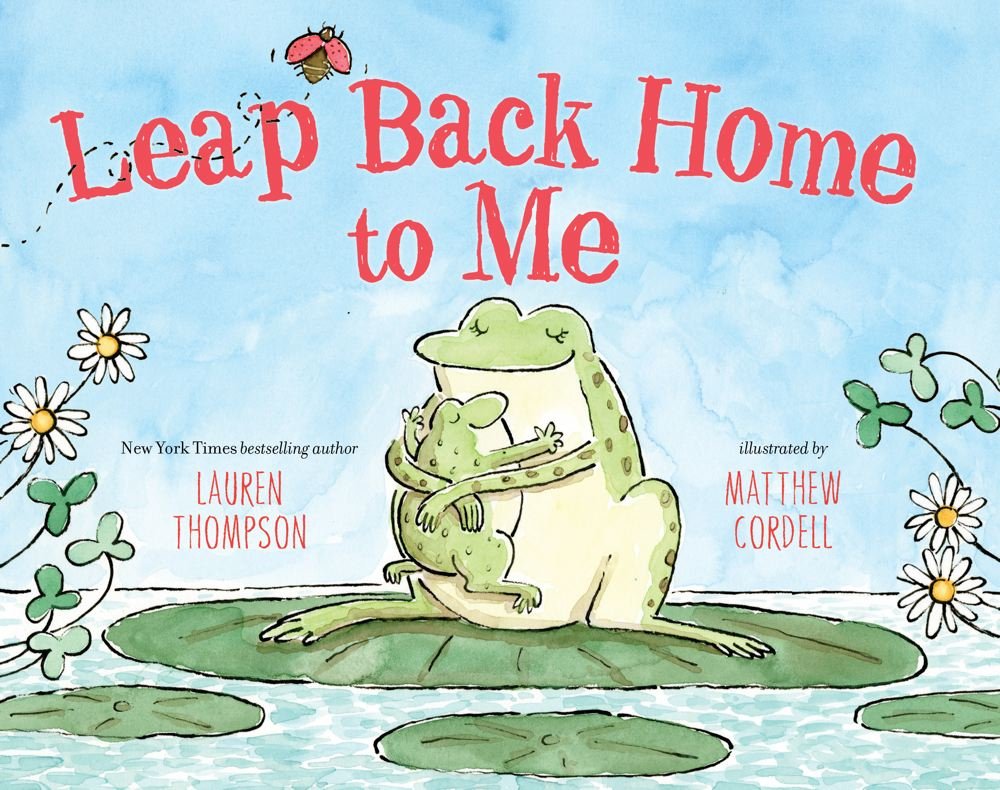
Another example can be found in a previous post with the book "Leap Back Home To Me". Students improvise on the phrase "Leap a-way" and then "Leap back home" This is the same rhythm with 3 quarter notes and a rest, but this time playing 2 measures at once. The phrases are still separated by a rest on beat 4 to provide a familiar structure. Eventually the phrases can get longer.

6) Rhythmic Building Blocks

When students can improvise successfully with quarter notes, you should add paired eighth notes. Orff utilizes speech to make rhythms seem more familiar to the students. We often pair 2-beat rhythm patterns with words and call them rhythmic building blocks or rhythmic building bricks. Here is an example of these rhythms with types of shoes--flip flop, tennis shoe, penny loafer, boot.


This activity was used with the poem "Cobbler, Cobbler". You can find more information about this lesson by clicking the link. Before improvising, we would compose 4-measure rhythmic patterns. Each student creates their own pattern to perform verbally and then notate. Before moving to the barred instruments, we choose one rhythm and notate it on the board. When we improvise, we are still in rhythmic unison performing the rhythmic phrase we notated on the board. After a few times experiencing this stage with different types of building blocks, I will give the students the opportunity to improvise with their own rhythm instead of a group rhythm. In order to end cleanly together, I always ask them to choose a quarter note and quarter rest as their last rhythm. This note will also be do. So, for the first 3 measures, it may feel like chaos, but on beat 4, we are in unison again. 

7) Gradually Shrink the Ensemble

Performing solo is very intimidating. Performing something you have created can make you feel even more vulnerable. So, here are some tips to gradually ease your students into improvising a solo.
First, they must be comfortable singing/playing in unison with the group, then in unison with small groups, in unison with partners, and finally performing a provided melody as a solo.

When approaching improvisation, continue the same pattern with large group, small group, partners, and soloists. On the barred instruments, I like to separate into 2 groups with woods vs. metals. For 4 groups, I separate like this: 1) glockenspiels; 2) soprano/alto xylophones; 3) soprano/alto metallophones; 4) bass xylophones/metallophones. You may separate differently based on your instrumentarium. You may choose to separate based on rows or numbers.

8) Differentiation

Differentiation seems to be an education buzz word in recent years. Improvisation is the best way to provide differentiation for your students. By letting the students improvise, they have the power to create a melody appropriate for their skill level. If they are struggling, they may stick to more simple rhythms and limit their choice of pitches. If they are more advanced, they may choose more complex rhythms and may explore more than one octave on the instrument. Remind the students that if they feel overwhelmed they can always simplify their rhythm or pitch options.

9) Self-Assessment

Exploration is usually unstructured and would consist of hitting random notes. Improvisation may begin as exploration but should move past that phase into purposeful musical choices. I provide a few questions for my students to assess their own performance.


Keeping a steady beat is important to feel the ends of the phrases. If your students cannot keep a steady beat while improvising, they need to simplify the rhythm or have fewer pitch choices. Ending on do is a must. In order to sound finished, we should end on the tonic. Lastly, they must ask themselves if their melody was sing-able. Could they try to sing and repeat what they just improvised? If they are leaping all across the keyboard, the likely answer is no. Encourage them to begin with stepwise movement, gradually adding skips or leaps. By giving them a rubric, you make them responsible to assess themselves and they will begin improving their performance each time.

10) Be a Model

My last tip for you is to BE A MODEL!!! If your students don't see you improvising, taking risks, and making mistakes, they won't be as confident to attempt their own improvisation. Create an environment that is safe and welcoming of all musical ideas. Show your students how to give praise to those who are succeeding and positive support to those who need extra guidance. If you are relaxed and comfortable, they will have fun and have no idea that melodic improvisation is supposed to be scary and difficult. Best of luck!!!

Coda

I hope you found something of value to help your confidence in teaching melodic improvisation! If you have any additional tips you would like to share, feel free to leave comments below. I would also love some feedback if you have done activities similar to these. If you would like more ideas about teaching melody, don't forget to follow our MusicEd Blogs collaboration for the entire month of February. You can find all past posts on the Facebook blog.


Friday, February 9, 2018

Finding Do with "Leap Back Home To Me"


I am a member of the MusicEd Blogs Community on Facebook. We are collaborating for the month of February to share our best ideas for teaching melody! If you are not already following us on Facebook, you should click the link above. 

For today's post, I am sharing a lesson on how to introduce melodic improvisation with a picture book. I love using children's literature in the classroom. Books are magical and can capture the attention of even the most challenging class.  about the book "Leap Back Home to Me" by Laruen Thompson. This book is featured in an old post from 2012, but I have updated my lesson procedures after many years of refining.

If you are not already familiar with this book, watch this short video:


When singing with solfege, I always call do home base. I use this book with second grade to introduce melodic improvisation on the Orff instruments and ending on do. 

The book is very rhythmic and is set up in stanzas of 4 lines. In each stanza, the first 3 lines are different places that the baby frog leaps when playing and exploring away from the momma frog. The 4th line always repeats the phrase "leap back home to me." Here's an example:

"Leap frog over the  lady bug,
Leap frog over the bee,
Leap frog over the tickly clover,
Then leap back home to me."

 I start reading the text in a speaking voice. But, on the last phrase, I sing "mi, mi, re, re, do." The students soon catch on to the form and anticipate the recurring phrase to join in the singing.

After finishing the book, we read notation of the phrase on the board and sing with solfege and hand signs. I also review the form of the poem asking how many places the frog leaps away from the momma before leaping back home. (Answer: 3)

We move to the Orff instruments and set up our instruments in C pentatonic, removing F and B. The students echo short melodies I create with mi, re, and do. We compare these melodies and I ask them which phrases sound finished.  We conclude together that it sounds more complete to end on do.  Then, we learn the phrase for "leap back home to me" (mmrrd) and perform it again while reading through the book.

To begin melodic improvisation, I have students echo this short phrase with a speaking voice and clicking their mallets-"leap away, leap back home". The rhythm is ta ta ta rest, ta ta ta rest.  I instruct students to choose new notes on their instruments for "leap away" but play mi, re, do for "leap back home". We practice this phase several times together and in small sections. Then, I ask them to choose new notes for "leap back" as well. The only note we must play together is "home". We take turns sharing as small groups and then I offer individuals to perform as well. If all the students feel eager to solo, I will provide a steady beat bordun on C and G as we take turns performing quickly, one after the other.

The students always enjoy the book and are eager to explore the instruments and improvise. By the end of the year, I introduce rhythmic building blocks and to get students comfortable improvising with rhythms using quarter notes and paired eighth notes.

I hope you and your students enjoy this lesson! It is one of my favorite activities I look forward to each year. If you would like more ideas about teaching melody, don't forget to follow our MusicEd Blogs collaboration for the entire month of February.


Saturday, October 13, 2012

Leap Back Home to Me


I love using children's literature in the classroom. Last spring, when browsing the book fair, this book immediately caught my attention. The title, "Leap Back Home to Me," made me think of how we call the pitch "do" home base. A few weeks ago, this book was used in a second grade lesson to introduce melodic improvisation, phrasing, and ending a phrase on "do."

Even though I had been looking forward to using this book in a lesson all summer long, my student teacher was actually the one who got to teach this lesson. The book is very rhythmic and is set up in stanzas of 4 lines. In each stanza, the first 3 lines are different places that the baby frog leaps when playing and exploring away from the momma frog. The 4th line always repeats the phrase "leap back home to me."

When my student teacher first read the book she used a speaking voice until she got to the phrase "leap back home to me." On this phrase, we used a simple melody "mi, mi, re, re, do." The students naturally began patting a steady beat and soon caught on to the form of the stanzas and began singing along with the recurring phrase "leap back home to me". 

After finishing the book, the student teacher directed the students' attention to the magnetic hand signs and had the students echo the pattern "mi, mi, re, re, do." She brought the students' attention back to the form of the poem asking how many places the frog leaps away from the momma before leaping back home. She asked them to pat a steady beat and count how many beats are in each sentence. (Answer: 4). Then, she asks them to calculate how many beats we pat before we sing "leap back home to me" (Answer: 12). They practice this pattern of patting 12 beats and then using hand signs to sing "mi, mi, re, re, do" before moving to the barred instruments.


Once at the instruments, she instructs them how to properly remove the F and B bars for C pentatonic. Using the "fake instrument," she has them echo some short melodies with mi, re, and do. Some melodies end on do and some do not. She asks them which phrases sound like they are finished (Answer: the ones that end in do). Then, she has the students echo the pattern "mi, mi, re, re, do" from the phrase "leap back home to me."

When the students can successfully play the melodic pattern, she asks the students to click their mallets for 12 beats and then play the melodic phrase. When students can successfully perform the pattern of 12 clicks and then the melody, she allows them to improvise on the 12 beats picking 12 bars to play before playing the   phrase "mi, mi, re, re, do."

Lastly, the students are asked to play along while the teacher reads the book again. At first, the students were playing way too loud. Even though the teacher was using the pendant microphone, it was still impossible to hear the book with 24 kids playing very loudly on their instruments. After asking the students to pretend like they were tiptoeing instead of leaping, they were playing quiet enough to hear the story. The students seemed to enjoy the book and were not afraid to explore the instruments and improvise. By the end of the year, I will introduce rhythmic building blocks and begin to get students comfortable improvising with rhythms using ta and titi.

Where Can I Find This Book?


Wednesday, July 18, 2012

Flipchart Download: Welcome Back Class


For several years, I have used this unit with my 4th and 5th graders to review the musical elements, notation, and get them ready for the school year. I have recently uploaded the flipchart to Promethean Planet, but you could totally teach this lesson even if you did not have an interactive white board. (I taught this unit for a couple years before we ever had this technology!) A few of the slides are pictured below. To see a preview of all the slides, follow this link.


This unit will last about 3-4 weeks. (I see my students once a week for 50 minutes.) The rhythm of the poem is adapted from Keetman's "Rhythmische Ubung" Patchen #5.

Here is an overview of the unit:

Lesson 1:

Perform body percussion; Review rhythmic notation; Perform poem in a 2-part round with body percussion.


Lesson 2: 

Transfer rhythms to hand drums; Perform in a round; with and without words; Introduce melody.


Lesson 3:

Review melody; Sing solfege with hand signs; Review staff and label pitches; Transfer to Orff instruments.


Lesson 4: 

Review melody. Add student improvisations; Perform in rondo form.

I ask the students to improvise with a simple sentence: "We are Cedar Grove." (ta ta titi ta).


I hope you enjoy this unit. Share your adaptation and let us know how you personalized it for your school!

Friday, July 13, 2012

Interactive Music Flipcharts


In May, I blogged about Technology In the Music Classroom. I talked about many wonderful tools we acquired during a construction renovation, including the interactive white boards. We have Promethean ActivBoards which run on ActivInspire Software. In this post, I will share some flipcharts that I have submitted to Promethean Planet and are available for free download. There are brief descriptions below, but you may also click the links to preview the slides before downloading.


This flipchart uses the poem "I Spy Elenore" in a 2-3 lesson unit. First, students will perform rhythms with body percussion (option to also perform in a rhythmic or melodic round). Students will count the syllables in candy bar names to discover the rhythmic pattern for each. Students will compose rhythms using candy bar rhythms. There is a printable worksheet for students to compose on their own after practicing on the Activboard. The final performance could be in rondo form, alternating "I Spy Elenore" with candy bar patterns.


In this lesson, students will perform a rhythmic ostinato on body percussion to accompany a poem "Once I Caught a Fish Alive." Then, students will try to identify which words the stomps, claps, pats, and snaps occur on. The body percussion will be transferred to unpitched percussion to accompany the poem. Encourage students to try the ostinato with and without the words. I can complete all these activities in one 50 minute lesson.


This flipchart features 20 multiple choices questions. Students view an instrument and identify it's instrument family. This can be used with clickers student response system or with paper and pencil. The key is included. 


This flipchart is used for a 3-lesson unit. It uses the poem "One For Ice Cream" to review rhythm, melodic contour, form, and improvise on xylophones. The final performance would be in rondo form alternating the song "One For Ice Cream" with improvised solos using ice cream flavors as rhythmic building blocks. Be sure to check out the notes on the slides for more tips to assist you through this lesson.


In this flipchart, students perform rhythmic ostinatos with body percussion and unpitched percussion to accompany the poem "Cobbler, Cobbler, Mend My Shoe."

***Although all these flicharts are entirely my own creation, the lesson sequences for "I Spy Elenore," "Once I Caught a Fish Alive," and "One For Ice Cream" were adapted from lessons presented by Brian Crisp during Level I Orff Training at the University of Kentucky during the summer of 2006.

More About Promethean Planet

Click here for a direct link to view all my uploaded flipcharts:
http://www.prometheanplanet.com/en-us/Search/resources/?Author=819220
At this moment, these are only 5 that are polished and uploaded. As I add more, I will also blog about them.

Also, feel free to add me as your friend on Promethean Planet. Here is a link to my profile page: http://community.prometheanplanet.com/members/rebecca.dennis/default.aspx

If you have an Activboard, make sure you also check out these
Free Resource Packs:
Music Notes and Scales Resource Pack
Music Tempo Resource Pack

Monday, May 21, 2012

My Mentor, Dr. Amchin

When I first became a music major, I thought I was destined to become a band director. High school band had provided me with some of my best memories and I didn't want that to end. When I took Dr. Amchin's elementary methods course, my whole outlook and career path changed.

Although I won't get into the details, I did not have many fond memories of elementary music. Until college, I had no idea that elementary music could involve more than singing along to a cd. Dr. Amchin got us up and moving, creating, exploring, and playing instruments. I quickly discovered that I belonged in this field of our profession.

Dr. Robert Amchin is currently head of the Music Education department at the University of Louisville and travels around the world teaching workshops on Orff and elementary education. Click here for a more detailed bio.


Dr. Amchin has recorded many of his lessons during workshops abroad as well as during his courses at UofL. You should check out his YouTube channel.


Here are a few of my favorite videos:

Nonverbal Pentatonic Echoing.
Dr. Amchin has several nonverbal clips that are really fascinating.


I really like how he keeps the dance nonlocomotor at first to teach the direction changes and to get the students used to the phrase lengths and form of the song. Humming the music instead of counting steps is also a trick I picked up from Dr. A.


This is EXACTLY how I teach any round or melodic ostinato. I teach everyone the melody and then I sneak in the extra part to see if they noticed. Then, I gradually add more people to the extra part until both groups are more equal.

Again, many more videos can be found on Dr. Amchin's YouTube Channel. If you ever have the opportunity to attend one of his workshops, I assure you your time will not be wasted.