Showing posts with label choir. Show all posts

Wednesday, December 16, 2015

DIY Flameless Candles

At the last minute, I decided I would like to have a prop for one of the choir songs. I wanted the students to hold a candle during "One Little Candle". I ran to the Dollar Tree and picked up some LED flickering tea lights. They came 2 in each pack for $1. During dress rehearsal, I realized the candles were too short and the audience would not be able to see the candles in the middle and back risers. I used some cardstock to form a cylinder to elongate the candles. The flame still seems small, but it worked for a last minute prop. Follow my simple instructions below to create your own.

Step 1: Gather materials--tape, pencil, scissors, LED tealight, and heavy construction paper or cardstock. 

Step 2: Roll the paper to form a cylinder   The same size diameter as the tealight. 

Step 3: Secure the paper with tape. This will be the back of the candle. 

Step 4: Mark a line about an inch long on the tape just below the base of the tealight. 

Step 5: Cut two vertical slits down to meet the edges of the pencil line. Fold along the pencil line to make a tab that leans into the center of the cylinder. 

Step 6: Turn the tealight on and place it in the top of the cylinder. The tab should prevent it from slipping too far down the center of the cylinder and also make it easy to access the tealight to turn it on or off. 

Friday, December 20, 2013

Treble Clef Candy Cane Video Tutorial

Many of you may have already seen my previous posts about Treble Clef Candy Cane ornaments.


This is the 3rd year I have made these for my Choir and Orff kids. I've gotten pretty fast and efficient at making them over the years. I decided to make a video this year. Perhaps it can give you a few tips to save you some time as well.


I have also uploaded the file for the Christmas card in case you don't want to start from scratch.
I uploaded it as a publisher file instead of a pdf so you may edit it to suit your needs.


I apologize for not posting this sooner. I'm sure all of you are on Christmas Break already. I'll try to post holiday tips in advance next time. I hope everyone has a very merry Christmas!

Thursday, December 20, 2012

Treble Clef Candy Canes

Last year, I made treble clef candy canes for my Orff and Choir students. I posted about this in July.


But, I didn't take a picture of the candy canes attached to the card. Here is this year's version of the gift for my Orff and Choir students. I used red and white candy canes this year because I had an abundance of white pipe cleaners on hand and didn't want to have to buy more.


UPDATE: I have added a new post with a video tutorial. Click this link.

Saturday, October 13, 2012

Blob Chorus: Free Ear Training Game

In a previous post, I announced that we would be getting iPads. I have only had the iPad for 2 weeks now and have already found some amazing and FREE apps to enhance my elementary music curriculum. If you love technology, stay tuned and become a follower of my blog; I'm sure I will have many posts about integrating the iPad into music classroom.

If you don't have an iPad, iPhone, iPod, or other device to use in the classroom, don't stop reading! The first app I will be sharing is also available in a web version and can be used on any computer connected to the internet! This would be great if you have a projector or interactive white board.


"Blob Chorus"

My favorite app so far is "Blob Chorus." This app is a free download but is also available in a web version at http://www.echalk.co.uk/tasters/taster1/taster.html.
It is an ear training game. The green blobs each sing a different pitch. Then, the King Blob sings a pitch. You have to select which blob is singing the same pitch as the King. On the bottom of the screen, there is a "hear blobs again" button so you can listen to the blobs as many times as you need before selecting an answer.


If you select the wrong blob, it explodes but allows you to continue guessing until you get the correct answer. You may also click "hear blobs again" to hear the remaining blobs sing.


The other button on the bottom of the screen is "Options" and allows you to change the difficulty of the game. You can have as few as 2 blobs to choose from or as many as 8 blobs to choose from. The default setting opens 3 blobs every time.

After 10 questions, the app gives you a score and percentage.


Classroom Application

So far, I have shown the app to a few classes if I had 5 extra minutes left at the end of the lesson. I explained the game and had students listen to the blobs sing. I did not allow them to shout out answers. I asked them to show me the number of the blob on their fingers. This allowed me to quickly scan the room and estimate how many people were hearing the pitches correctly. This will be a great tool to use when students are in line waiting for their classroom teacher to pick them up. Instead of expecting them to wait in silence, they will want to be quiet so they all can hear the blobs!

In a few weeks, I plan on using this as a type of exit slip for 2nd grade and up. During my regular lesson, students will take turns going back to the iPad, completing a game of 10 questions, and recording their score. If I don't think the students will be honest, I may have to leave one student at the iPad the entire time to ensure honesty and help out if they have a question. I will let you know how this goes when I attempt this assessment.

Several of my students went home and immediately downloaded the app on their iPods! I'm sure your students will enjoy this game as much as mine do!

On a side note: 

My 2 year-old even enjoys this app. But, she wants to get the answers wrong. She loves to see the blobs explode. She says, "I made a messy, messy, mess!" She gets upset if she guesses the correct answer! LOL

Thursday, July 19, 2012

To Stop the Train


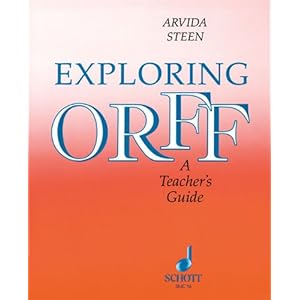
To Stop The Train is an easy round for children to learn. It can be found on page 280 of Arvida Steen's "Exploring Orff: A Teacher's Guide." Arvida suggests adding movement to visually enhance the round, although she doesn't describe any specific gestures. 
Dr. Robert Amchin, head of the music education department at the University of Louisville, has often included this round in his classes and workshops. In the video below, you can see Dr. Amchin first teaching the movements of the round then adding the words one phrase at a time. Last, he introduces the pitches. To create harmony, he allows the class to become the first group while he sneaks in as the second part of the round. He gradually adds people to group 2 until both groups are equal.


This year, my fellow music teachers and I decided to have our students perform this simple round in our Central Area Music Festival. But, we knew we had to make the round longer and more interesting.  First, we started in unison with movements only and no voices. We added one phrase at a time until we sang the entire song in unison. Then, we sang the song one time through in a 4-part round starting 4 beats apart. Last, we sang the song one time through in an 8-part round starting 2 beats apart. Here is the video of our performance. These are the elementary choir students from 3 neighboring schools.


All of the students really enjoyed this round; it quickly became a favorite! For weeks, I would walk through the hallways or lunchroom and hear someone singing or humming it. Whether you are just performing it in class or you are polishing it for a performance, I hope you and your students enjoy this round.